James McInnes’ journey took a sharp turn in 2013 when he made the decision to adopt a vegan lifestyle. After building and scaling a successful fintech company, McInnes found himself at a crossroads – professionally accomplished, but personally unfulfilled. Stepping away from the tech world, he sought a path that aligned more closely with his values, beginning with a commitment to healthier living through veganism. What began as a personal shift quickly evolved into a greater purpose. “When we first started Odd Burger, we were focused on bringing healthier foods to the masses at an affordable price,” McInnes explains. Launched in London, Ontario, Odd Burger emerged as Canada’s first vegan fast-food chain and has since grown into a global brand known not just for its plant-based burgers, but also for its line of affordable, ready-to-cook, frozen vegan meals.
Like many startups, Odd Burger began with a simple mission: bringing organic fruits and vegetables from local farmers to customers. Expanding their offerings to vegan meal kits in 2015, Odd Burger identified real demand for their vegan creations when they first sold out at a major food festival in Southwestern Ontario, confirming a growing appetite for plant-based innovation. Determined and now operating with strong product validation, this food innovation business opened its first restaurant in 2016, further expanding as a manufacturer of frozen vegan products in 2018. The leap into retail was anything but accidental; it was driven by rigorous, data-informed experimentation. McInnes, a self-described data enthusiast, transformed the restaurant into a real-time product testing ground. How? “If customers liked an item, we would keep it as a ‘special’ on the menu to see if there is continued demand. If that continues to be the case, we considered that product for our retail line,” says McInnes. From plant-based burgers to chicken tenders to breakfast sausages, Odd Burger is now considering hitting the plant-based aisles in grocery stores with their hottest-selling vegan pizzas, following measurable, increased demand in their restaurants.
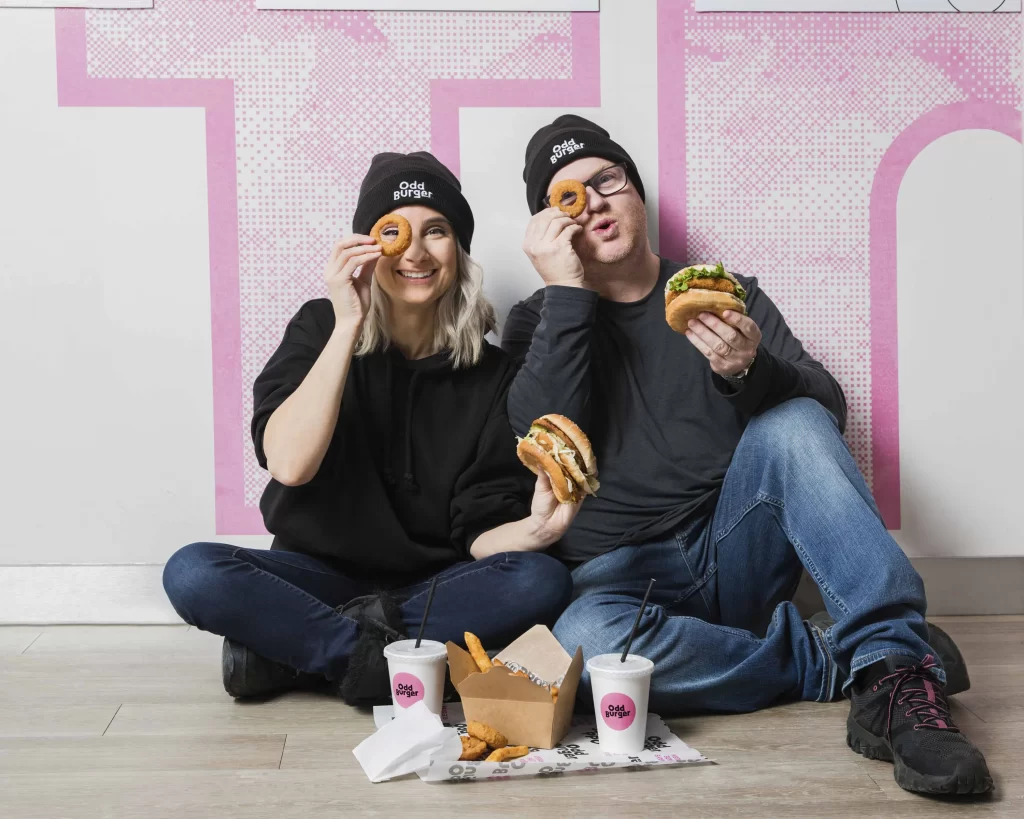
In the competitive world of food innovation, while new products may catch initial interest, it is a long-term business strategy that builds and sustains growth. For Odd Burger, success has come from focusing on both. McInnes and his business partner, Vasiliki McInnes, have focused on bringing affordable, healthy, and convenient foods to the masses from the beginning of their journey.
When you run a food business, creating real value for customers has to come first—whether that means lower prices, better ingredients, higher quality, or greater convenience.
This philosophy guides everything at Odd Burger, from pricing strategy to product development. With each decision, the company is tackling the challenge of making healthy, plant-based eating both accessible and affordable.
Having a great product is only the starting point. “As a food company, we have to understand that people expect good-tasting products as a baseline,” says McInnes. What sets a business apart is the strength of its brand. That competitive edge comes from building real trust—something Odd Burger achieves through consistent visibility, backed by a robust social media and public relations strategy that brings their story to life and keeps it in front of customers. “We realized that if we want people to pick our products over other competitors in retail, we will have to develop a good brand presence. Especially for later stage foodtech companies, this helps in building high trust in the brand,” adds McInnes. For Odd Burger, this focus and strategy are as important as the products on their menu.
Innovation at Odd Burger goes beyond product development and business strategy—it’s rooted in delivering a better customer experience. Embracing a customer-first approach, the company even applies technology to the smallest details, like creating irregularly shaped burger patties. This subtle touch is intentional, designed to give their plant-based burgers a more natural, handcrafted feel that resonates with customer expectations around quality and authenticity. “Nobody likes a hockey puck burger. It’s all about the perception, and so our irregularly shaped burger gives a more natural look and high-quality feel to our products,” says McInnes. Adoption of feedback also plays a crucial role in this process and this allows Odd Burger to meet the diverse needs of retailers. When Odd Burger brought their frozen burgers into convenience stores, there was a need for their products to be microwavable. “We didn’t know people microwaved their burgers, but they do! Part of our product development came from this learning, and we switched from fully raw frozen products to fully cooked ones. Our customers can now just microwave the burger for 60 seconds and it’s ready,” says McInnes.
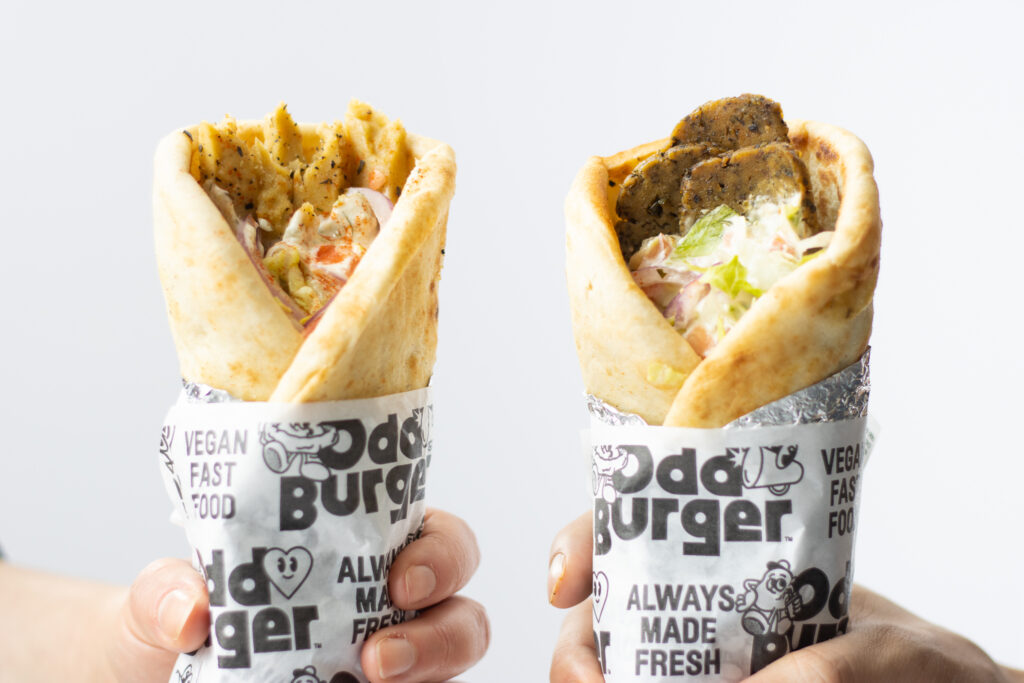
Odd Burger’s scale-up journey took a significant leap forward in April 2021 when the company went public, listing on the TSX Venture Exchange and OTCQB. The move was a calculated strategy to unlock new investment opportunities and broaden its investor base. “Our sector was hot at that time,” says McInnes. “Industry valuations were strong for most plant-based businesses, including ours. We were in the right place at the right time.”
Still, he cautions that going public isn’t a one-size-fits-all solution. The process, he says, was complex and demanding. “It often feels like you’re running an entirely new business,” McInnes explains. “You need to do your homework—not just to understand the mechanics of going public, but to determine if it’s truly the right next step for your company’s growth.”
That momentum—fueled by strategic decisions, strong product development, and a booming sector—soon led to major distribution breakthroughs. Today, Odd Burger supplies 500 7-Eleven locations across Canada and has secured a national partnership with Dot Foods, one of North America’s largest food redistributors. It’s a move that’s expanding the company’s reach across Canada and into the U.S., signaling its transition from regional disruptor to continental contender.
Odd Burger isn’t just a success story, it’s a signal of what’s possible when bold vision meets smart execution. From a small startup in London, Ontario to a publicly traded company with international distribution deals, Odd Burger is reshaping the future of food on a national scale. With every plant-based product that hits the shelves, they’re challenging legacy norms, accelerating the shift toward sustainable eating, and proving that disruptive innovation can and does come from Southwestern Ontario.